Contact
Contact us


PEDESTRIAN AND SIDE DOORS
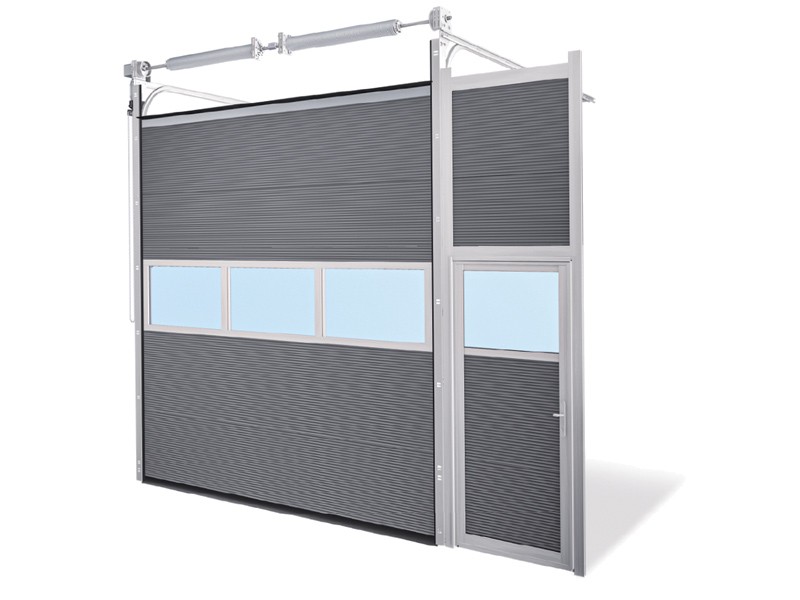
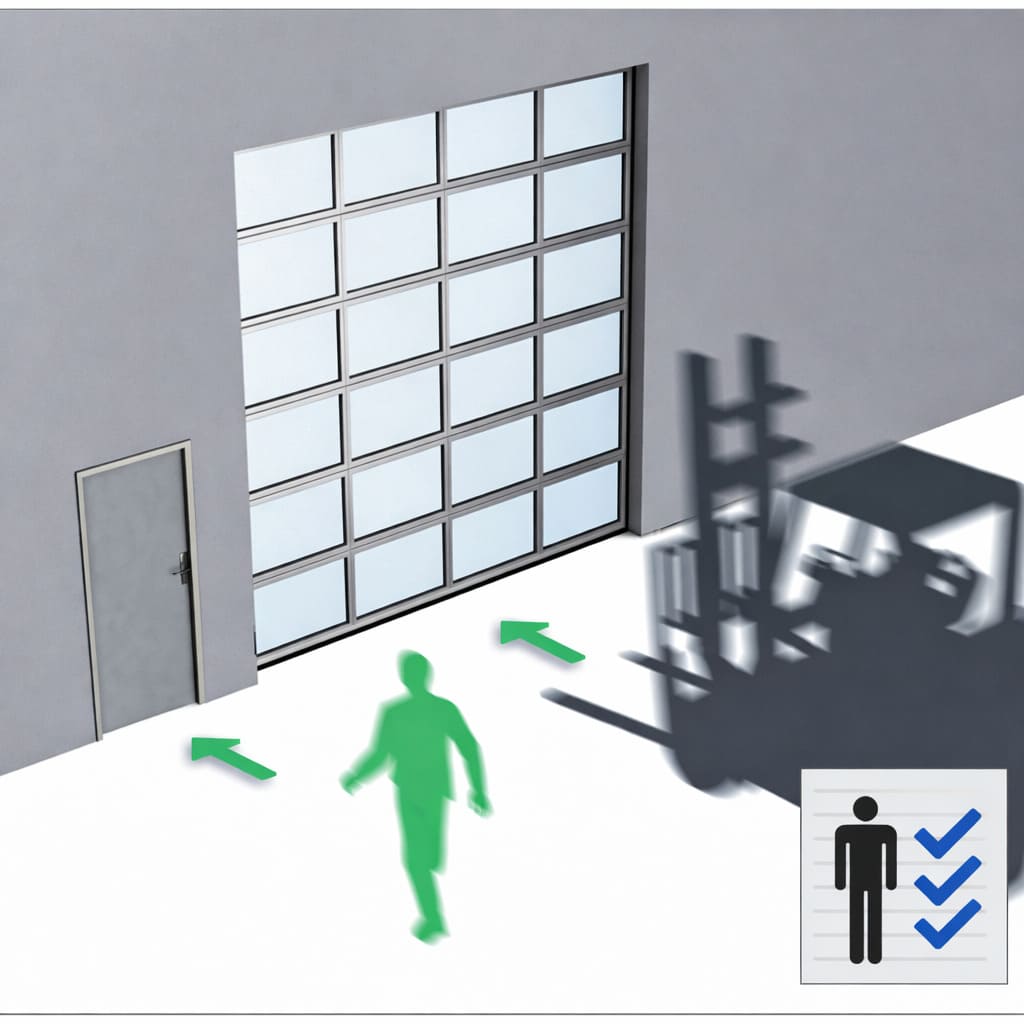
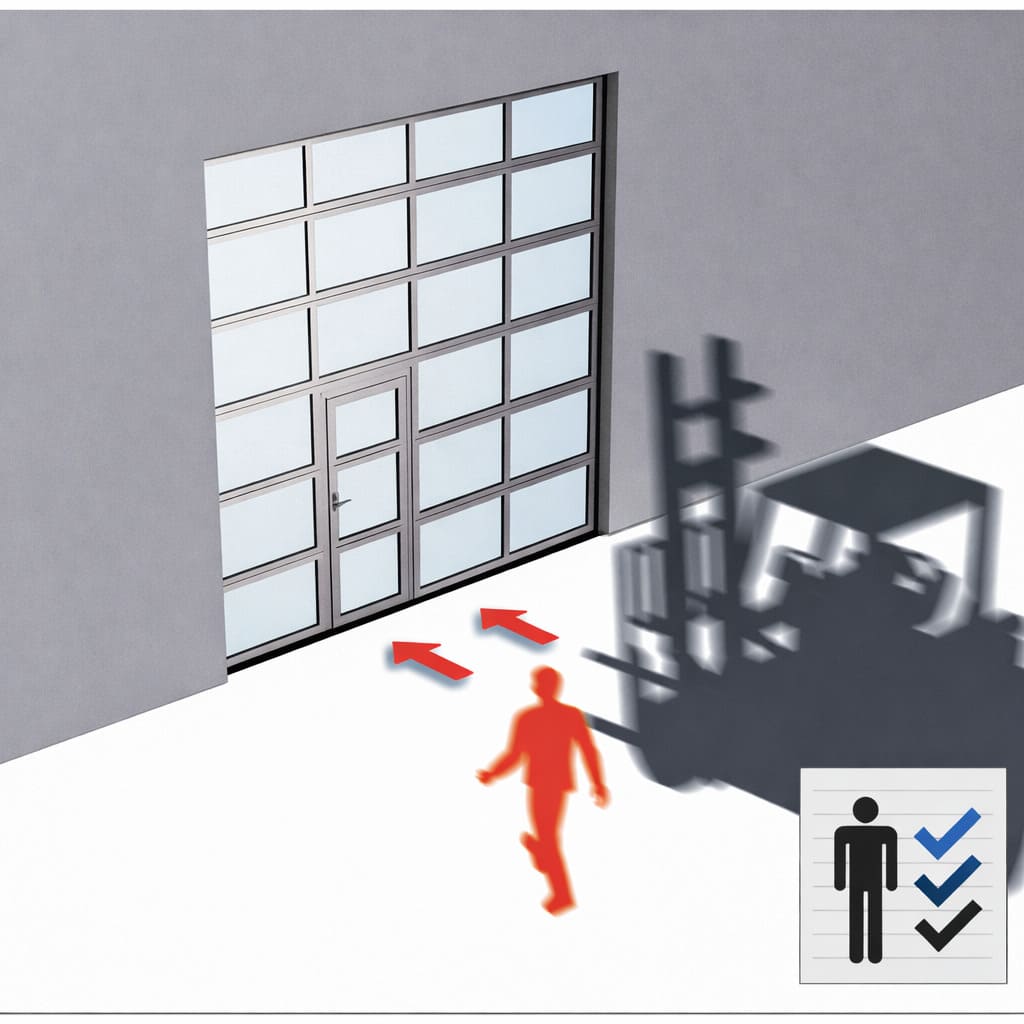
Novoferm NovoLux or Thermo doors can be fitted with a pedestrian door, which can be used to separate the passage of people and goods from the movement of the door. This requirement can be fulfilled in two ways: with a fixed pedestrian door on the façade, independent of the sectional door, or with a side door installed directly beside the door.
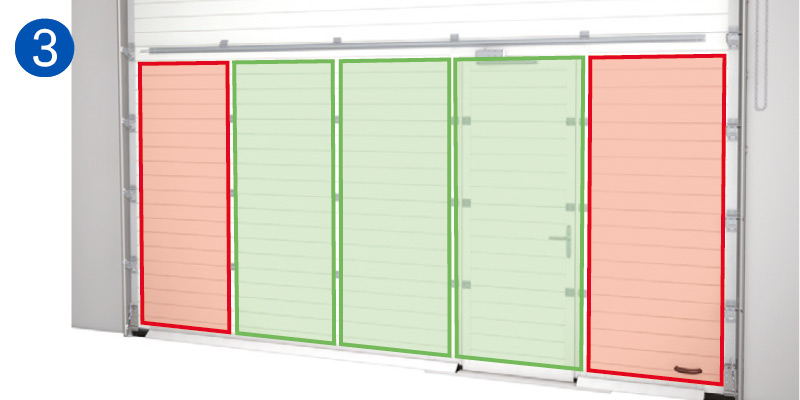
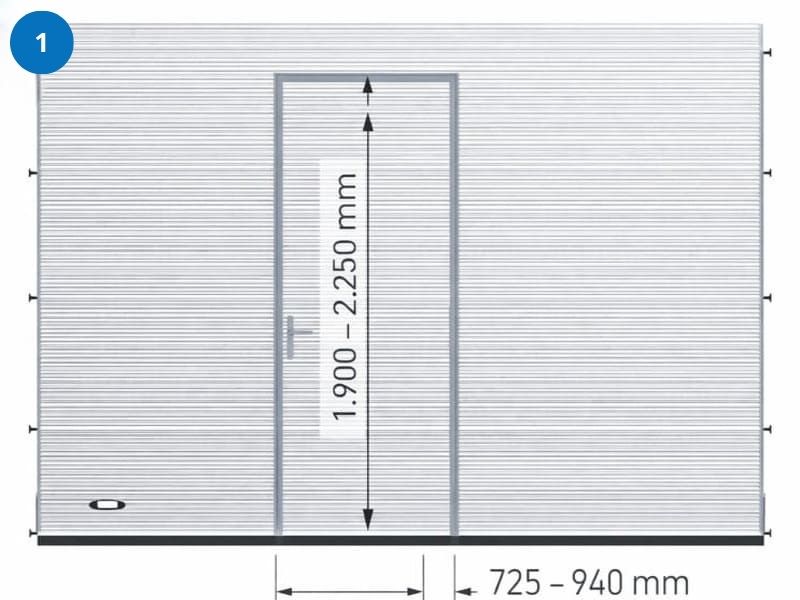
It is also possible to integrate a pedestrian door inside the sectional gate, but this solution may reduce its stability. In addition, there are limitations on width, height and threshold height, so the door may not meet the legal requirements for emergency exits.
SEPARATE PASSAGE FOR PEOPLE AND GOODS
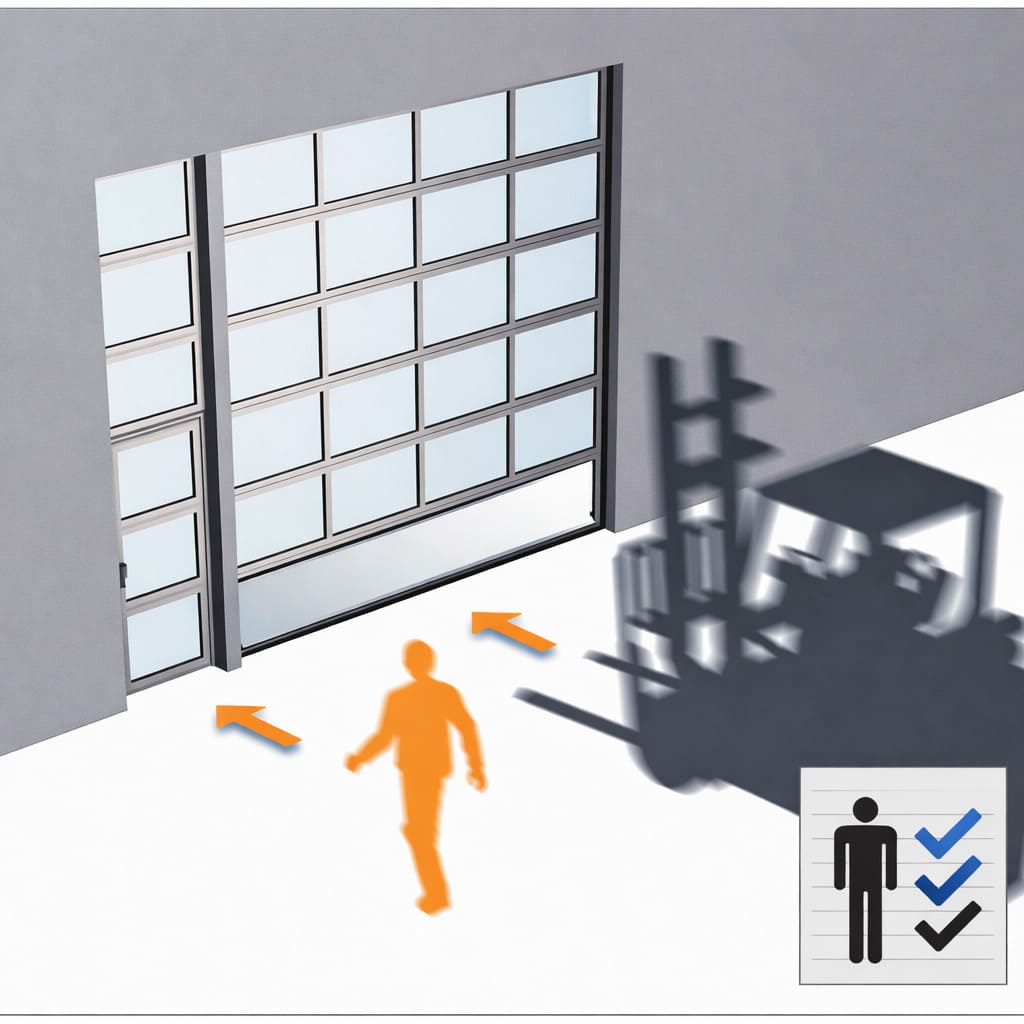
PEDESTRIAN DOOR INTEGRATED IN THE SECTIONAL DOOR
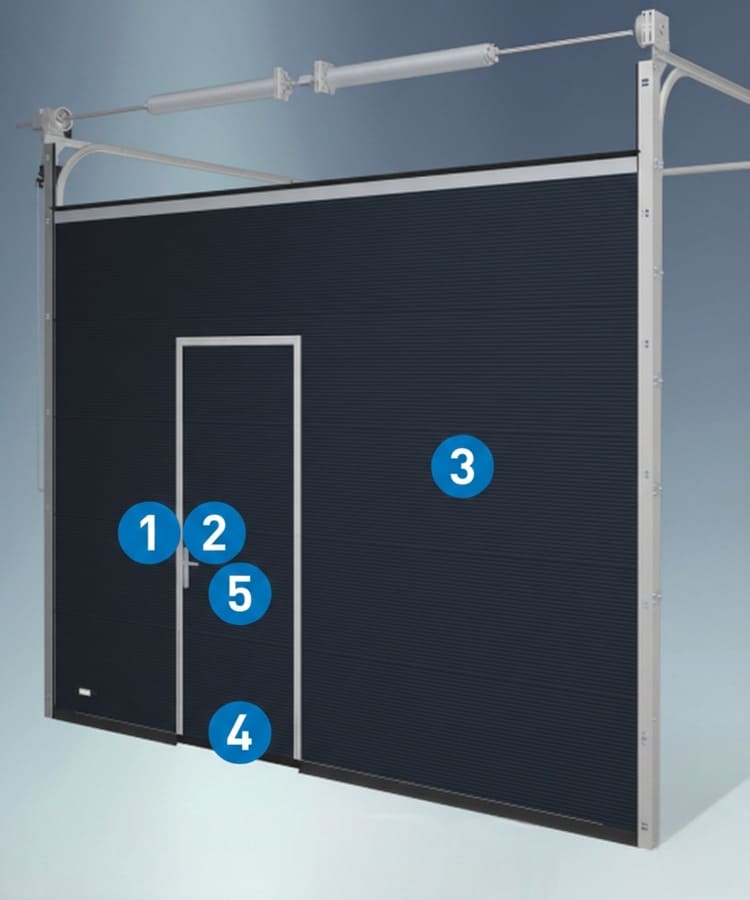
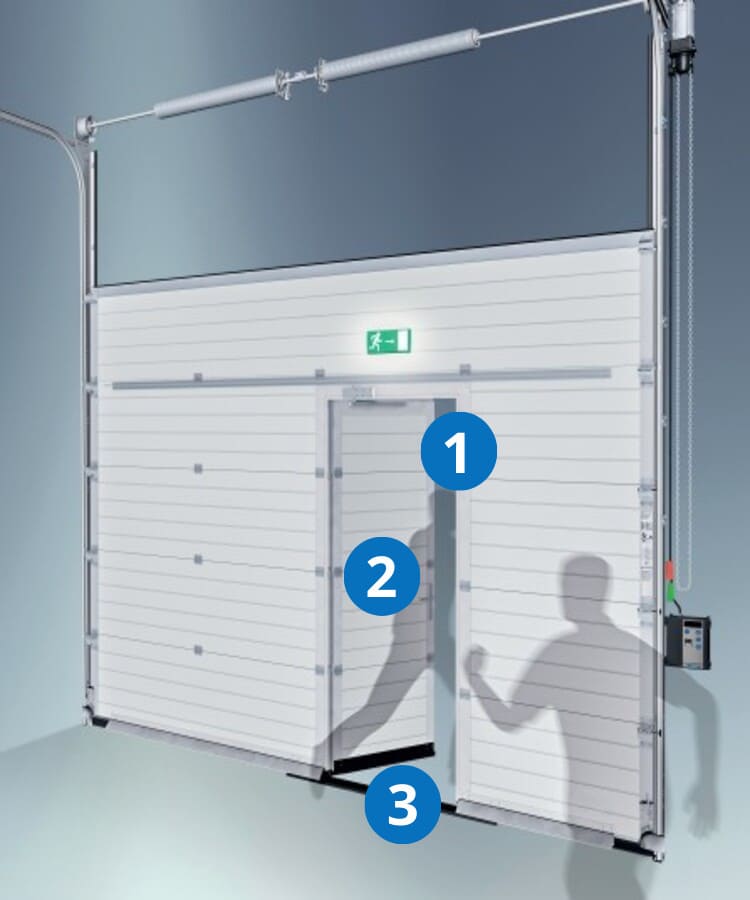
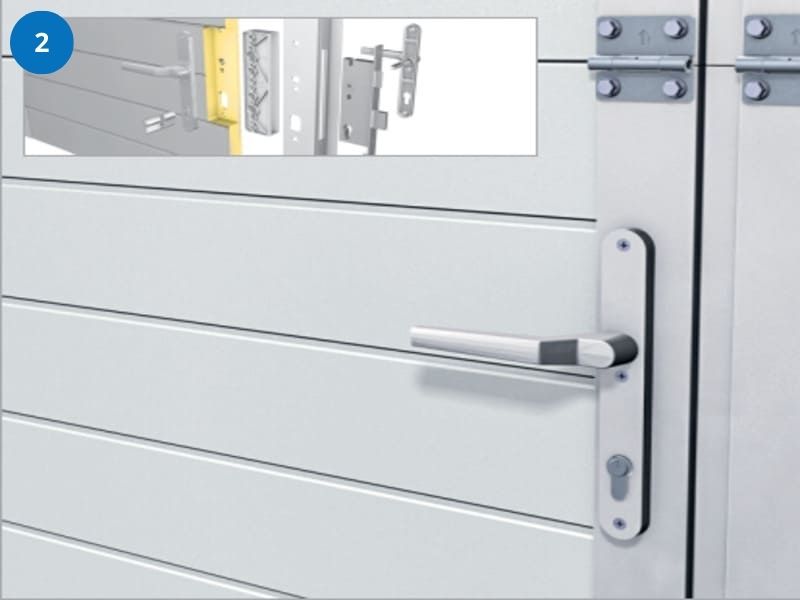
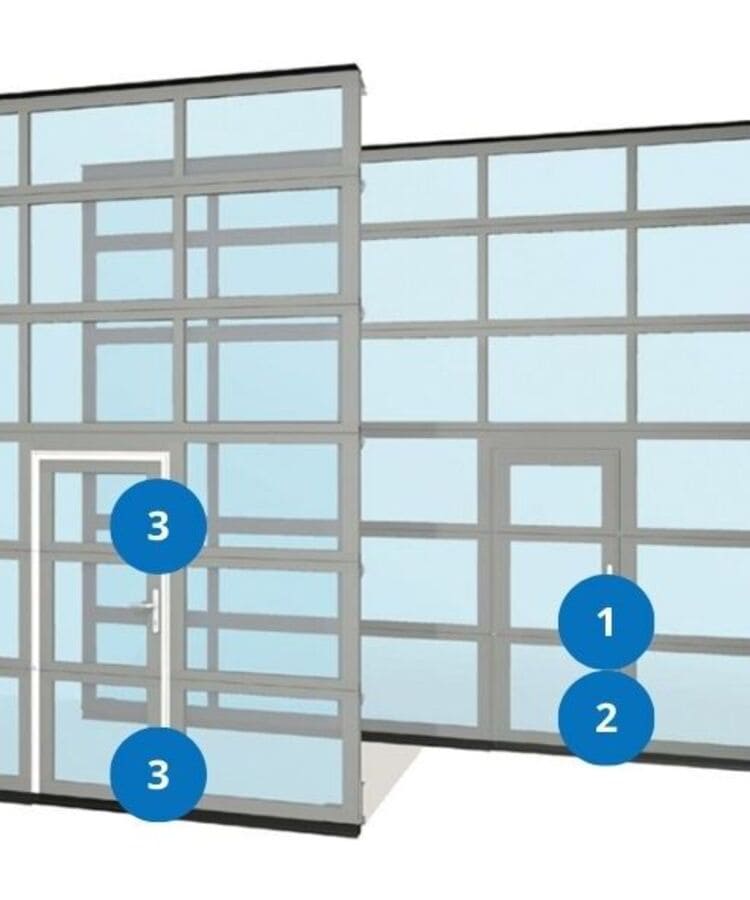
It is possible to integrate a pedestrian door directly into the sectional door. Wicket doors are designed to meet high aesthetic and safety requirements and include dedicated technical equipment:
- Integrated door switch: increases safety by correctly managing the movement of the door when the wicket door is in use.
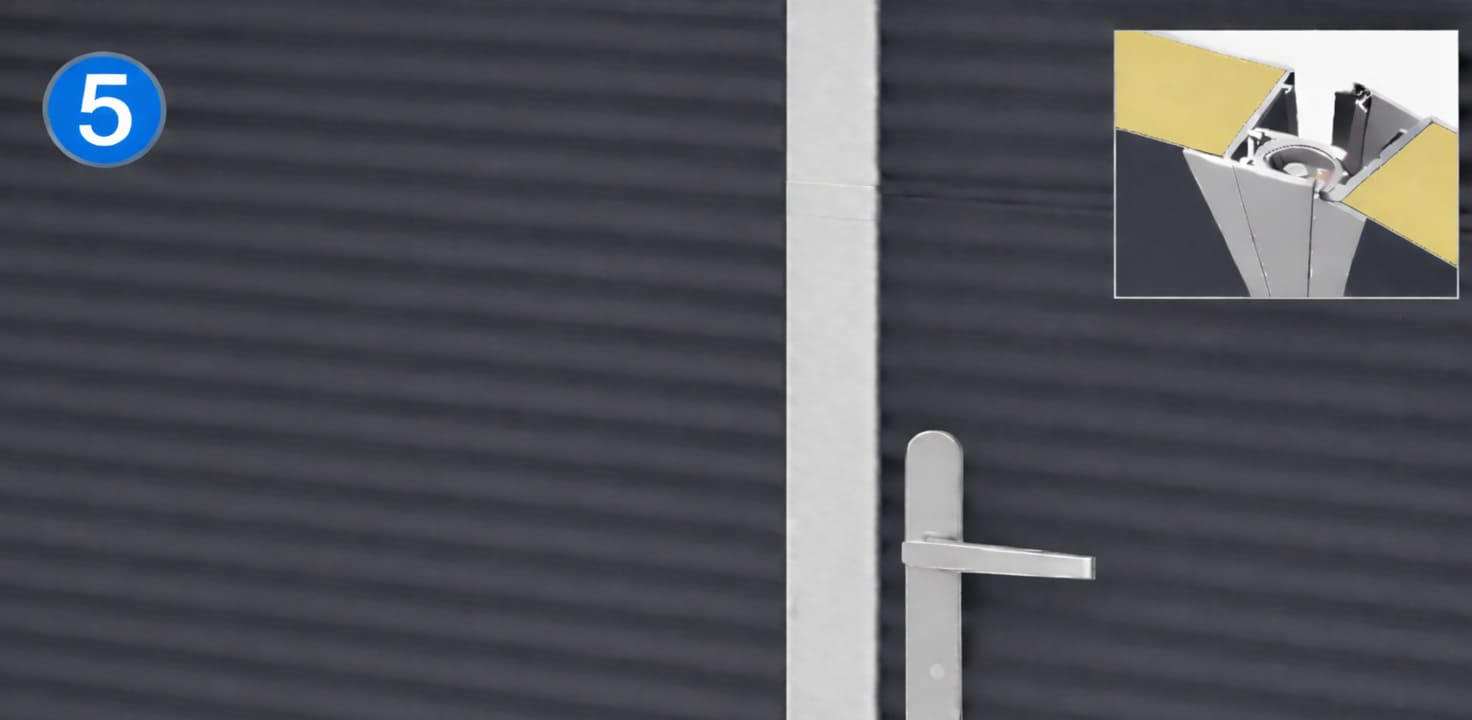
- Stabilisation pins: help keep the door leaf stable and accurate, improving reliability over time.
- Optimised positioning: integration is designed to ensure ease of passage and consistency with the door configuration.
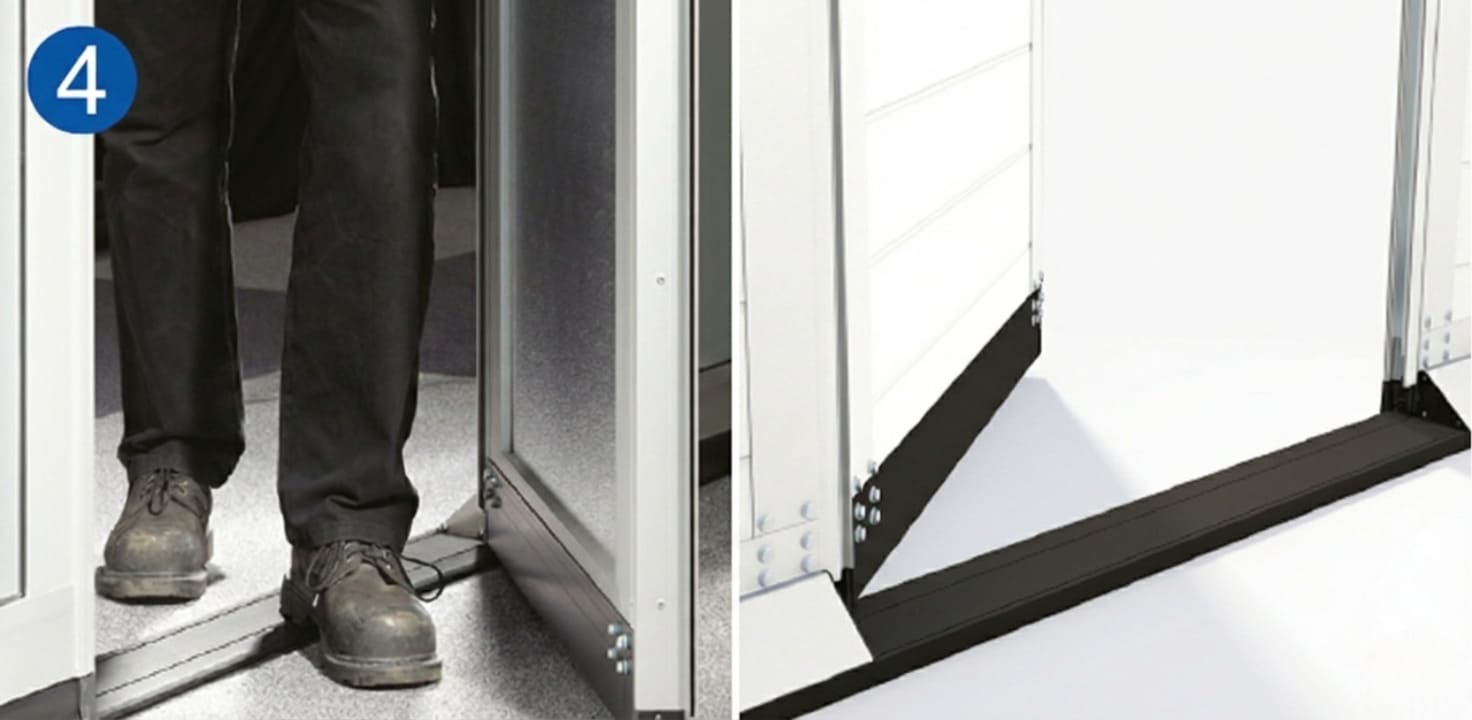
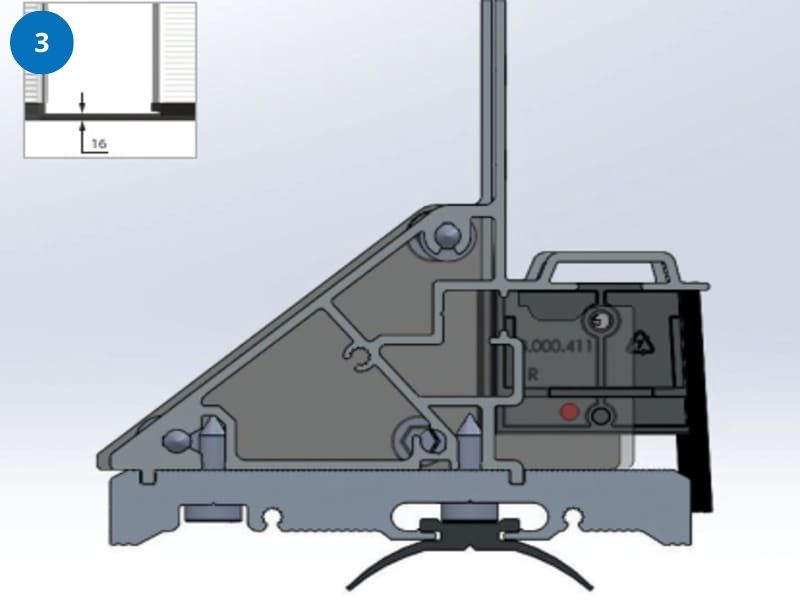
- Threshold heights: a choice of 16, 110, 195 mm allows access to be adapted to operational needs and type of use.
- Careful aesthetics: refined finishes and details for a clean, professional result.
This provides practical and safe pedestrian access for daily transit, reducing the need to open the entire door and improving flow management. At the same time, the integration of dedicated equipment maintains performance, reliability and attention to detail.
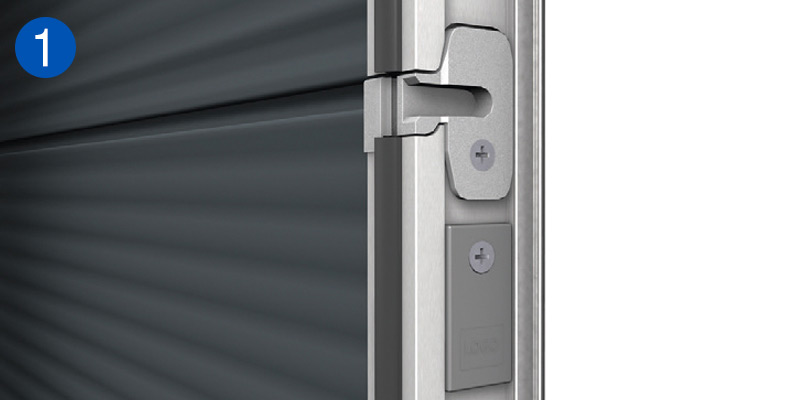
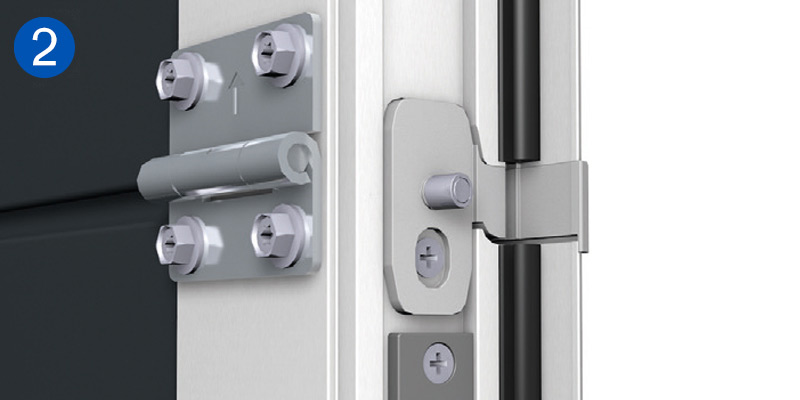
INTEGRATED PEDESTRIAN DOOR WITH EXIT FUNCTION
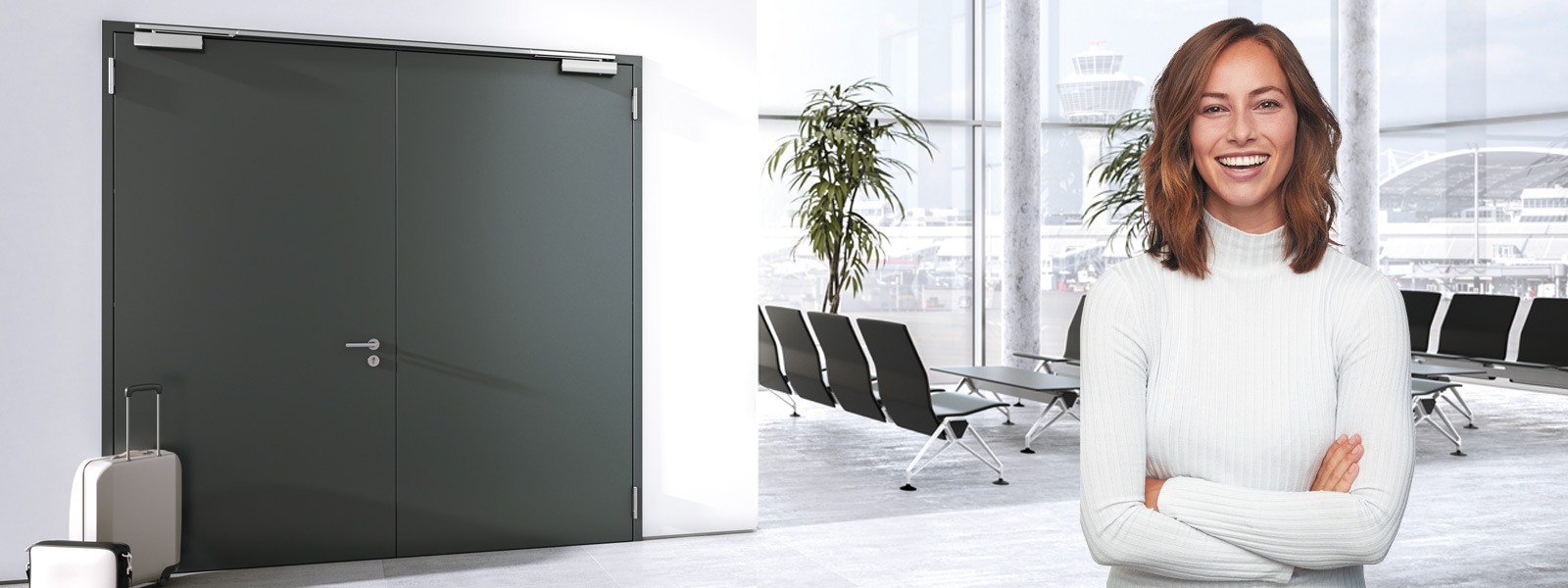
If the integrated pedestrian door is to be used as an emergency exit, local and national regulations must be checked in advance and advice sought from the relevant authorities. The required conditions may vary depending, for example, on the number of people present or working inside the building, or on how many emergency exits are already in place.
In general, the main aspects to be considered when assessing the suitability of a pedestrian door as an emergency exit are:
- Useful passage height and width: they must guarantee easy passage and comply with the minimum requirements for exiting.
- Panic lock: may be required to allow rapid opening from the inside in an emergency situation, without the use of keys.
- Height of the threshold: it must respect the prescribed limits, because a threshold that is too high can hinder passage and increase the risk of tripping.
Furthermore, as foreseen for emergency exits, the door must open outwards: in this way, during an evacuation, the push of people exiting does not hinder opening, but facilitates it, reducing the risk of blockages and speeding up the outflow.
LOCK AND HANDLE VARIANTS FOR PEDESTRIAN DOORS
We attach great importance to the security and user-friendliness of our pedestrian doors, taking care of every technical and functional detail. Hinges, switches, locks and additional latches are designed to offer long-term reliability and, at the same time, as clean and aesthetically pleasing a result as possible. Upon request, we provide customised advice to define the most suitable solution based on: threshold height, opening direction, dimensions and positioning of the pedestrian door.
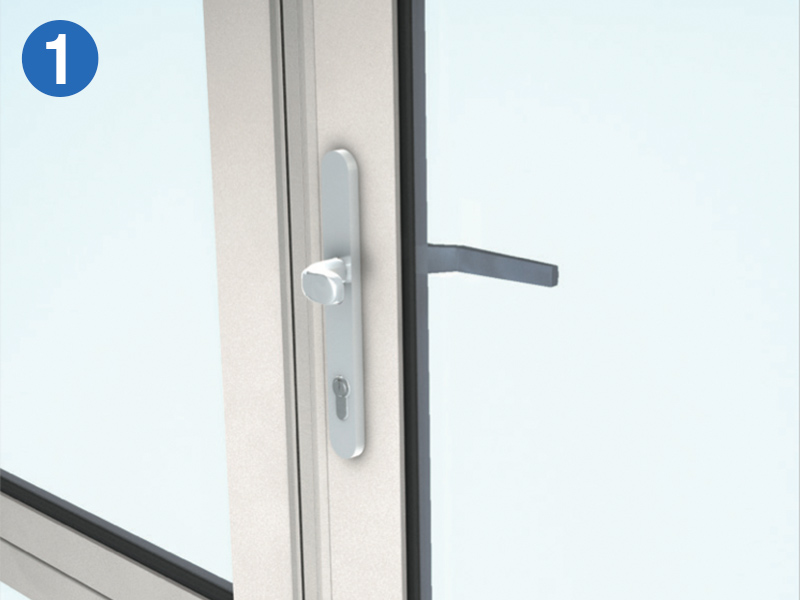
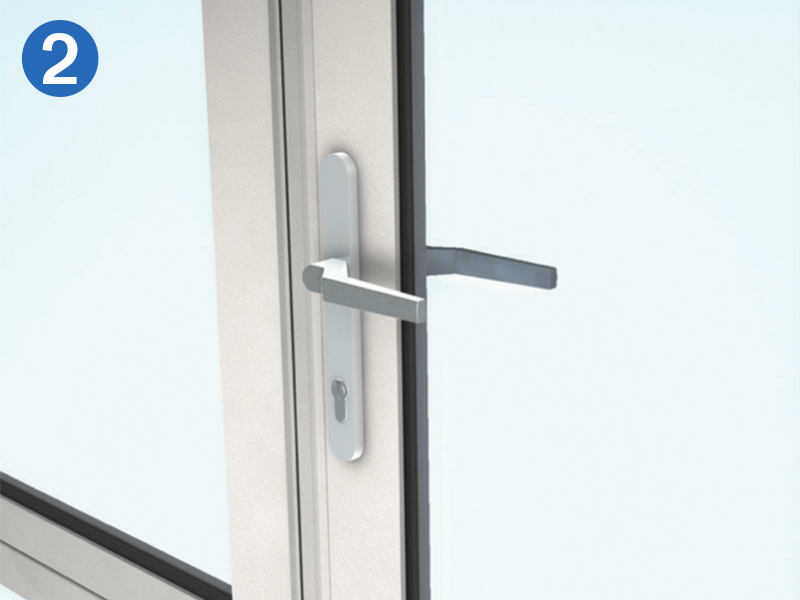
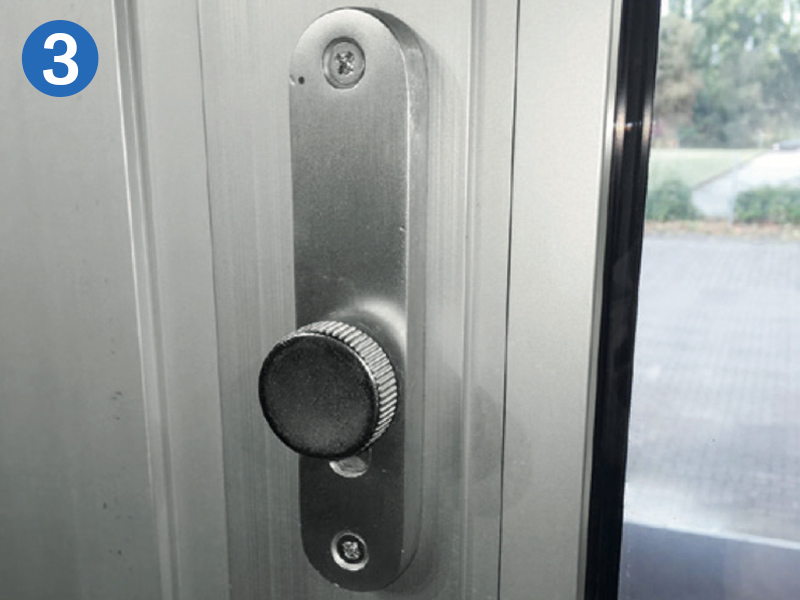
The Novoferm pedestrian door range includes six locks: two standard and four panic locks(when the pedestrian door is used as an emergency exit).
STANDARD LOCKS
- Handle on both sides
- External fixed knob + internal handle
PANIC LOCKS
- External fixed knob + inside handle (panic function E)
- Handle on both sides (divided panel, panic function B)
- External fixed knob + inside push bar (panic function E)
- External handle (split frame) + internal push bar (panic function B)
Regulations may require a panic lock.
MATCHING SIDE DOORS
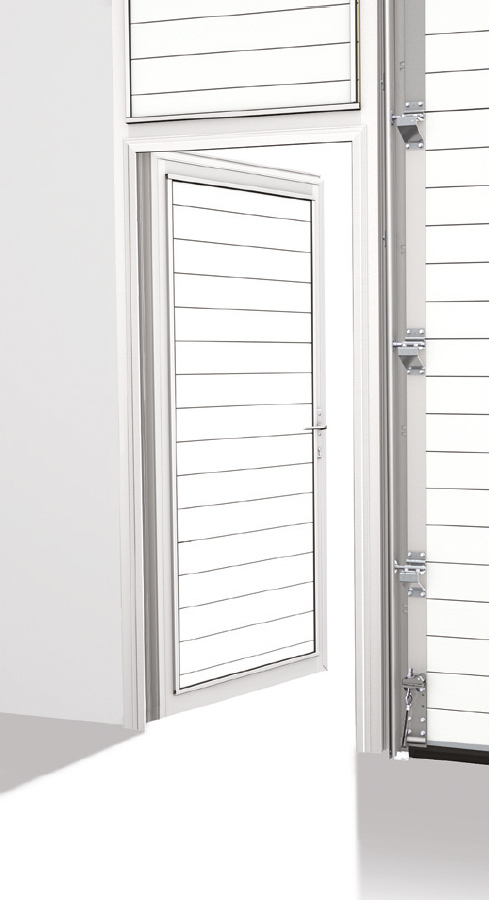
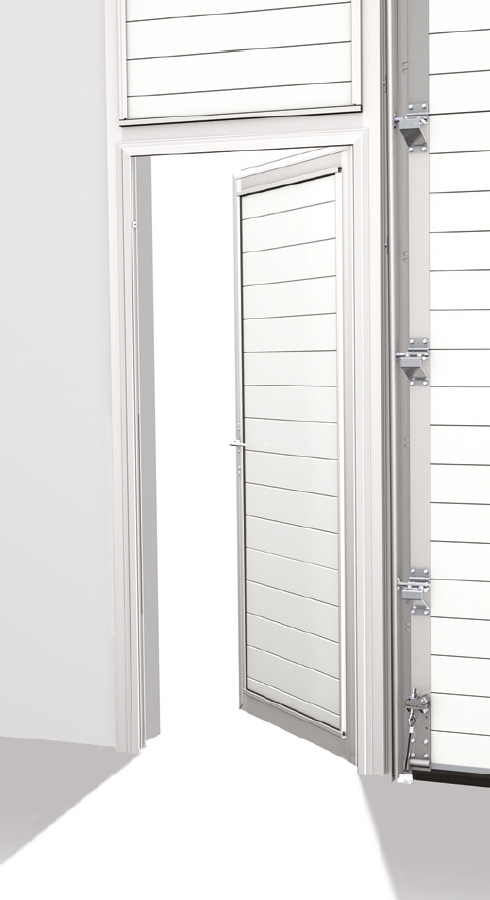
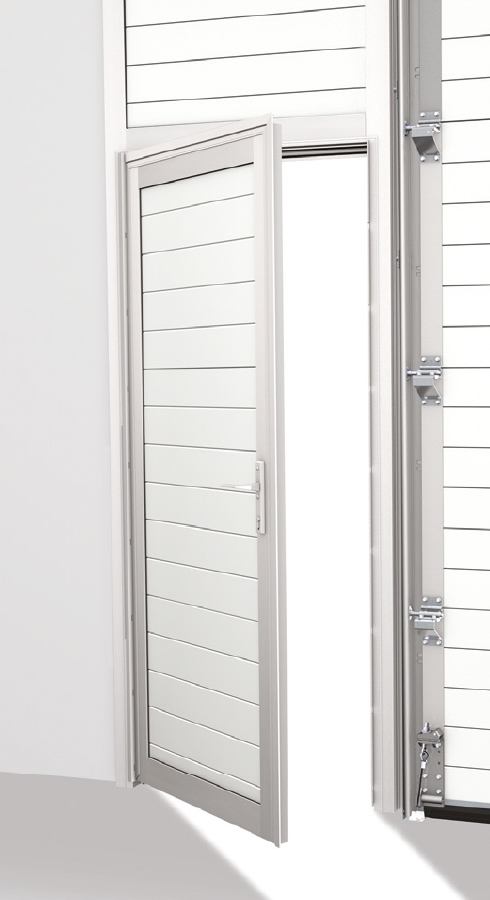
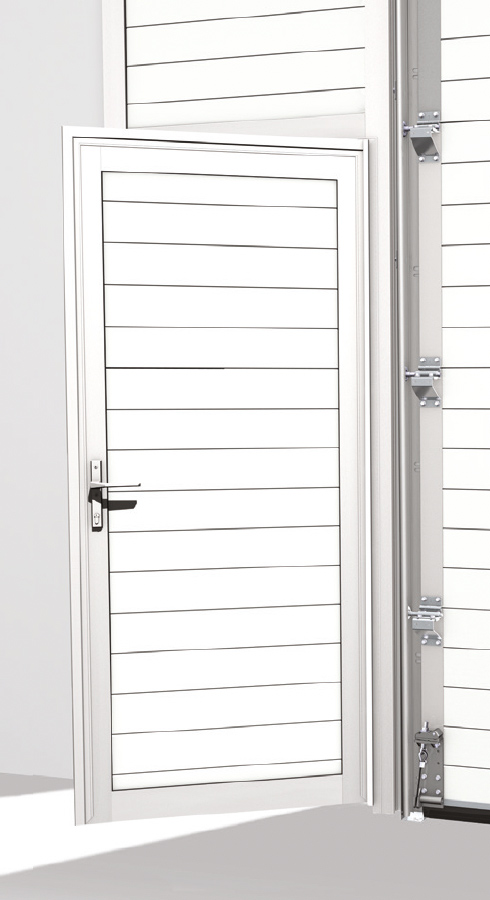
The main advantage of a side door is the possibility of completely separating pedestrian transit from goods transit, improving safety and making day-to-day operations quicker. The side door is installed on the façade, next to the sectional overhead door, with a look that is coordinated with that of the door: in this way the whole is homogeneous and aesthetically pleasing.
The side door can be made to open inwards or outwards. DIN left or DIN right versions are available as standard.
If the side door is also used as an emergency exit, it must open outwards. In any case, the requirements must be checked with the relevant local authorities.
FLUSH OR IN-LIGHT INSTALLATION
A sectional door is always installed inside the light hole. For aesthetic consistency, matching side doors are also normally installed in the same way, resulting in a more uniform façade and a visually harmonious whole.
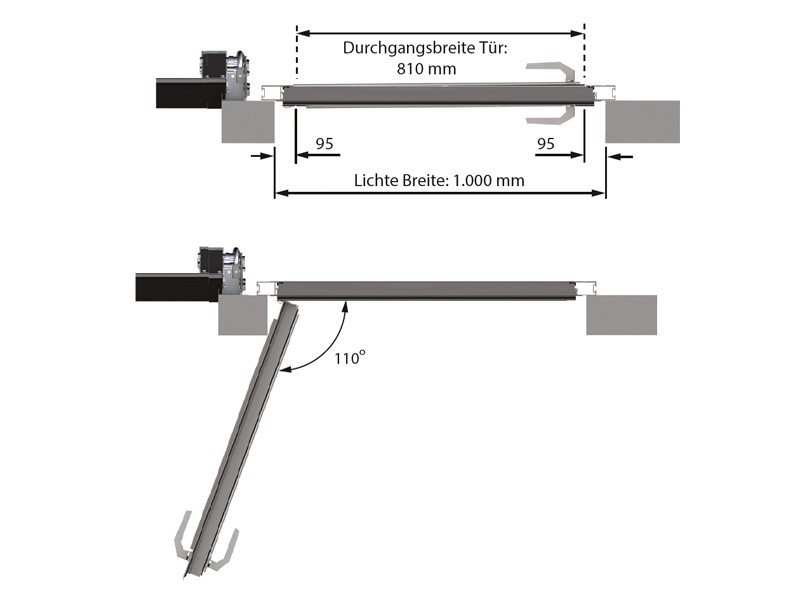
This solution offers two main advantages: door and door are aligned on the same plane, and the useful passage width of the side door is approximately 810 mm against a light hole of 1,000 mm.
Conversely, by installing the side door in the wall hole, the door and door are not coplanar and, with the same light hole, the passage width is reduced to approximately 750 mm.